 With James Cameron’s Avatar up for nine Academy Awards tonight, including Best Picture and Best Director, here’s an detailed look back at the record-breaking film.
Over $700 million in domestic box office grosses later, James Cameron‘s epic sci-fi adventure Avatar has beaten months of mediocre buzz and a cryptic advertising campaign to become the highest-grossing movie of all time. Ironic given that the last time Cameron was behind the camera the result was Titanic, another movie which took on similar, insurmountable odds and became the #1 box office champ in history. Sure the inflation nerds will always pipe up and say, “But wait! When adjusted for inflation Gone with the Wind is really the highest-grossing movie of all time!” To which we’d all say, “Yeah but Gone with the Wind didn’t have big blue aliens with long tails, did it?” Thus there is no comparison.
The movie is a full-blown phenomenon with critics and audiences and now it’s being showered with awards, including a slew of Oscar nominations including Best Picture (for which Avatar is a front-runner) and Best Director (Cameron is competing with ex-wife Kathryn Bigelow, the director of The Hurt Locker, for the prize). I had the good fortune of seeing Avatar when it was first released in December before strong word-of-mouth, a lackluster holiday movie line-up, and the promise of mind-blowing visual wonders exploding from the screen through the magic of 3D transformed a potential Christmas turkey into a celluloid slot machine that’s been paying off in cash and prestige for Cameron and 20th Century Fox ever since.
James Cameron has long been one of my favorite filmmakers. His movies brim with high drama, well-crafted characters, innovative action sequences, cutting edge visual effects, and genuine emotion. Cameron’s a born storyteller and with filmmaking technology forever embryonic there seemed to be no boundary to what Cameron could accomplish on screen provided all the fundamental elements — cast, screenplay, and a top-notch technical crew — were in place. After all this is the man who launched a movie production fraught with consistent problems and massive cost overruns and came back with a multiple Oscar-winning, highest-grossing film of all time. James Cameron could do no wrong. But I didn’t like Titanic very much save for the last hour when it truly became a Cameron film, because the story was populated with the type of characters the writer/director was not accustomed to and their dialogue was cringingly tin-eared. It seemed he should stick to putting words into the mouths of hard-ass soldiers and homicidal cyborgs. When he announced the beginning of Avatar‘s production after a decade out of limelight, which Cameron spent shooting documentaries about the Titanic and oceanic life, parodying himself on the HBO series Entourage, and mulling over his next project, my hopes were raised.
Back in 2002, five years after Cameron and Titanic achieved their mutual goal of world domination, British film writer David Hughes published The Greatest Sci-Fi Movies Never Made, a highly detailed and addictive compendium of potentially great genre films that never made it past the pre-production phase. In a chapter devoted to Cameron’s aborted film version of the classic Marvel comic Spider-Man, Hughes mentioned Avatar on the very last page. His description of the plot sounded quite intriguing but the ambitious scale of the production and the budget required to realize it ($300 million, a lot of money back in those days) combined to ensure that Avatar would continue to exist solely in the head of its creator. You had to figure one day the constantly evolving visual effects technology and the ongoing competition between the major studios to see who can make the biggest moneymaker would lead to Cameron resurrecting the story and bringing it to beautiful big-screen fruition, particularly when it was his obsession.
After my first viewing of Avatar I emerged from the theater to taste the crisp air of a December afternoon and couldn’t help but feel a bit under whelmed. Avatar came to theaters after being cloaked in secrecy and cryptic hype since production finally began back in 2007. Rumors about the film’s plot and the sheer breadth of its supposedly groundbreaking visual effects (enhanced by the glories of eye-popping digital 3D, whose recent revival also spurred Cameron to resurrect the project) attacked the worldwide web with all the sound and fury that a James Cameron epic demands and more often than not delivers on a silver platter. The real question was whether or not the final product could live up to the exorbitant hype its mere existence generated, lest we forget the lackluster Star Wars prequels and Matrix sequels. The truth is no movie could live up to that kind of hype and at the end of the day that’s unfair to the movie itself because a lot of people will be going into Avatar with dreams of bearing witness to the next monumental achievement in the annals of cinema. Maybe some people will feel that way about this movie, but I sure didn’t.
I try not to have great expectations about any movie even if it’s one I’ve been anxiously awaiting for several years. Avatar contained all the crucial ingredients for the kind of E-ticket cinematic experience I groove on, including a plot with parallels to current global events that gave it a timely quality most major studio event films lack. I recall enjoying the movie a great deal the first time, but it certainly wasn’t what I expected. Plus, the more I think about it, the more I realize Avatar wasn’t that good at all. I first spotted trouble in the movie when due to a lack of sleep the previous evening I dozed off for a few minutes during a scene where the Na’vi ride the friendly skies of Pandora on their pet flying dragons. When I woke up around twenty minutes later they were still riding around on their dragons. Then there was that scene that I cannot for the life of me recall because it was so dull and superfluous to the narrative (perhaps it was more flying dragons) that I decided to violate a cardinal rule of my movie going etiquette: I went to use the restroom during the movie. Now I’ve been known to hold my bladder during a movie to the point of distension because I feared missing something important if I left the theater in the middle of the movie. When I returned from my bathroom break I found that nothing at all was missed: no integral character moments or mind-blowing action sequences. To me that’s not exactly the mark of a riveting narrative.
The movie merely mines territory that Cameron has explored in nearly every movie he’s made without putting original spins on the material. His story focuses on a lush but dangerous alien world called Pandora that contains a special mineral known as Unobtainium and considered to be of great importance to a planet Earth running out of fossil fuels faster than they can be used and the evil corporations willing to spend every dollar and risk every life they have at their disposal to invade Pandora, exploit its blue-skinned indigenous community the Na’vi, and strip-mine the planet to its last root and bug. Jake Sully (Sam Worthington), a paraplegic Marine, gets a golden opportunity to fund the surgery that will restore his ability to walk if he takes part in a program where a human being is mentally connected to a specially-constructed Na’vi body composed partly out of human DNA. Naturally once he infiltrates the Na’vi and learns to live among them in peace he begins to sympathize with the natives and eventually joins with them in the fight to save Pandora and it’s precious eco-system and expel the evil corporate dictators and their mercenary thugs from the planet forever. Ever since I begin my assessment of Avatar I’ve come to realize its director isn’t exactly the most original of filmmakers. Harlan Ellison can tell you just how James Cameron’s imagination really works, and Cameron’s tendency to crib from superior source material when writing his stories is more unmistakable than ever before in Avatar. While watching this movie I spotted glaring references to films like A Man Called Horse, Dances with Wolves, Apocalypse Now, and On Deadly Ground as well as Frank Herbert’s Dune novels and the literary adventures of Edgar Rice Burroughs’ John Carter of Mars. There’s nothing wrong with continuing a great literary and cinematic tradition, but imitation is the most languid form of flattery.
Reportedly Cameron’s original story treatment was much darker, more character-driven, and perfectly simpatico with the director’s finest films. My personal favorite film on James Cameron’s resume has always been his much-maligned 1989 deep sea science-fiction epic The Abyss which explored story and character terrain very analogous with Avatar. In addition it was also Cameron’s most interesting and deeply emotional relationship film and probably his only film where the interactions between humans and alien life forms didn’t lead to them fighting each other but rather to the humans fighting amongst each other and how we choose to treat our planet and our fellow man. These themes were further enhanced by the vastly superior extended version, the only version of The Abyss I’ll watch these days to be perfectly honest. But when that movie was first released Cameron was compelled by the studio chieftains and the edict that a shorter movie means more tickets sold at the box office but in the years since the director has established himself as one of the filmmaking titans of Tinseltown and a man who can make his movies as long as he wants. Since the running time of Avatar already pushes three hours I highly doubt there’s a longer and infinitely better version out there awaiting DVD release. What we see in theaters is all we ultimately get and that’s not much. Cameron’s films are typically improved by adding more scenes for the video and DVD releases, but the only way Avatar could be improved at all would be to shorten it, by at least 45 minutes.
The character work is lackluster. Sure maybe The Terminator and Aliens weren’t exactly Lord Jim but James Cameron can do a hell of a lot better than this. They’re not so much human beings as vital components that keep the plot machinery chugging along, which is a shame since Cameron assembled a fine cast. The news that Sigourney Weaver would be reuniting with Cameron for the first time since he directed her to cinematic immortality and an extremely well-deserved Best Actress Academy Award nomination in Aliens, still one of the finest sequels ever made, in the critical role of Avatar project leader Dr. Grace Augustine gave me a lot of hope that Avatar would be a brave and bold return to the visionary filmmaking that he built his career on in the 1980’s. Next to her the addition of character actor extraordinaire Stephen Lang, who’s been excellent in just about every movie he’s done, to the cast as the scar-faced mercenary warrior Colonel Quaritch gave the production a air of class and quality. Both Weaver and Lang are better than average in their roles but Cameron doesn’t really give them much to work with, and that’s not limited to the lifeless script.
I don’t know why Hollywood keeps insisting on trying to shove Sam Worthington down my throat but I hate it so they need to knock it off. Right now. This monotonous Australian mimbo had previously added absolutely nothing to the uninspired Terminator Salvation. The Sully character demanded an actor capable of playing various shades of what probably looked on paper to be a complex and interesting person. Worthington isn’t that actor. The only time he shines in the part is during his Avatar scenes. It’s here that Worthington gets the chance to cut loose and inject some primal energy into his performance. Eventually you wish Sully would just stay in his Avatar for the rest of the film. This does bode well for that remake of Clash of the Titans he stars in opening soon. Zoe Saldana, as the Na’vi warrior woman Sully becomes smitten with, gives one of the better performances of the movie bringing a sly yet innocent eroticism and ferocious raw power to her character. The rest of the actors, primarily Giovanni Ribisi, Joel David Moore, Michelle Rodriguez, and Dileep Rao acquit themselves admirably in their roles but the monotonous script gives them little to do but be soulless cogs in Cameron’s Spruce Goose.
As for the director James Cameron does a fantastic job behind the camera marshaling his cast and crew into cinematic battle and the action scenes are as viscerally thrilling and visually spectacular as anything he’s directed before, from flying piranha attacks to the sinking of the Titanic. This time though the action beats flail about on screen like their occurrence was merely a box on Cameron’s grocery list to be checked and not organic to the plot because without the strong emotional core that powered his finest films all we’re watching is an overlong visual effects show reel. The FX artisans in Cameron’s employ did exemplary work as usual. Their work is so good it belongs in a better movie. It all doesn’t help that the socio-political and environmental themes Cameron chose to explore in Avatar are first and foremost fundamentally naïve and more befitting a teenage wannabe sci-fi writer scratching out fan fiction in his bedroom on a rainy Saturday afternoon. The corporate and military villains might as well be wearing black hats and bushy mustaches so we’ll know just how evil they are. At least the characters in some of Cameron’s previous films existed in a morally gray world where nothing was as cut-and-dried as the people and events at the center of Avatar. Besides Cameron’s sympathies may lie on the surface with the Na’vi, but deep down he gets a major woody for the advanced weaponry and vehicles utilized by the mercenary army led by Quaritch. This at least makes the director the anti-Michael Bay; he doesn’t need to have technical support from the real military on his films because he likes to build his own armies anyway therefore giving him the freedom to take an anti-interventionist stance while secretly drooling over the highly sophisticated military hardware. Cameron’s a big kid at heart in love with big boy toys after all.
Cameron’s not the only one coasting on the fumes of their past achievements. Composer James Horner first teamed with the director to score Aliens back in 1986 and his work on that film remains one of his finest as a musical composer. However most of the scores Horner has composed in a career spanning nearly three decades, mainly every score he’s done since Braveheart, have essentially cannibalized the far better work he did in the early-to-mid 1980’s. After winning an Oscar for scoring Titanic Horner has freewheeled through the subsequent decade redoing the Titanic score on every film he works on but with slight variations. I hoped that reuniting with Cameron on a large-scale sci-fi adventure would inspire Horner to return to the daring and innovative musical canvases that were his stock in-trade before Oscar respectability seemed to set his career on permanent auto pilot. Alas it was not to be. Unsurprisingly Horner’s Avatar score is more of the same with more huge and uninspiring emotional music cues and sweeping themes to spell out in Technicolor just how we should all feel at a given moment. A little music experimentation would’ve been more welcome, but composing a forgettable score for a forgettable film seems sadly appropriate. Thankfully the movie looks and sounds (with the exception of the music) fantastic thanks to the first-rate technical crew assembled by the director.
For all my Avatar bashing there are a few select moments that I will remember from this movie: the hulking battle suits used by the mercenaries against the Na’vi that look like Cameron took the power loader from Aliens and pumped it full of anabolic steroids and rust; the devastating attack on the tree the Na’vi call home (and it’s called … Hometree; very original Mr. Cameron); Sully’s first experience inside his Avatar, rediscovering what it was like to have a pair of healthy legs; the tender intimacy between Jake and Neytiri; the various wonderful and frightening creatures that inhabit Pandora; and the hideous scar on Quaritch’s face. The much-hyped 3D effects unfortunately don’t live up to the hype. Nothing about them really stands out and in the end they don’t seem all that necessary; although at times the 3D does make some of the more lush and colorful environments seem relaxing and immersive, much like a screensaver.
Avatar was a decent enough entertainment but it’s uninspired narrative, lackluster performances (notice how in all the awards attention given to this movie not a single member of the cast has been recognized), and over-hyped visual effects left me feeling cold and disappointed. I’d still prefer this to the crass and mean-spirited Transformers: Revenge of the Fallen but when it comes to the big-budget genre event films of 2009 James Cameron’s film pales severely in comparison to Watchmen and Star Trek. Why aren’t those movies being showered with awards and breaking box office records? Cameron’s planning on making a sequel to Avatar so I’ll hold out hope that next time he’ll take a break from supervising the painstaking visual effects and concentrate on the story and characters more. Without them, Cameron might as well be directing movies for SyFy.






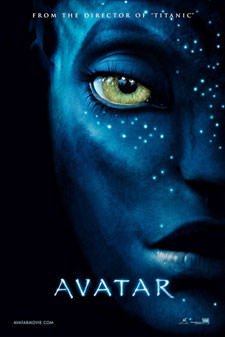 With James Cameron’s Avatar up for nine Academy Awards tonight, including Best Picture and Best Director, here’s an detailed look back at the record-breaking film.





There is a lot truth in here. Great essay.
Comment by Jerry — March 7, 2010 @ 6:57 pm
how was avatar advetising cryptic man, i knew the whole story for the godamn teaser, and it had all the money shots in it
Comment by Dr Blitzgeek — March 8, 2010 @ 1:07 pm